01
Improving Design System Adoption with Inner Source
My Role
Product Designer / Researcher (MSc Thesis)
In collaboration with Kai Richter and Jan Rüssel
Company
SAP
Duration
6 months
Tools
Stakeholder interviews, Thematic analysis, Mural, Design system audits
SAP’s global design system supports a large and diverse enterprise product portfolio and is used by more than 400 designers. Despite its maturity and breadth, adoption across product teams was inconsistent. This project examined the underlying causes of these challenges and introduced an Inner Source model to enhance scalability, flexibility, and shared ownership of the design system.
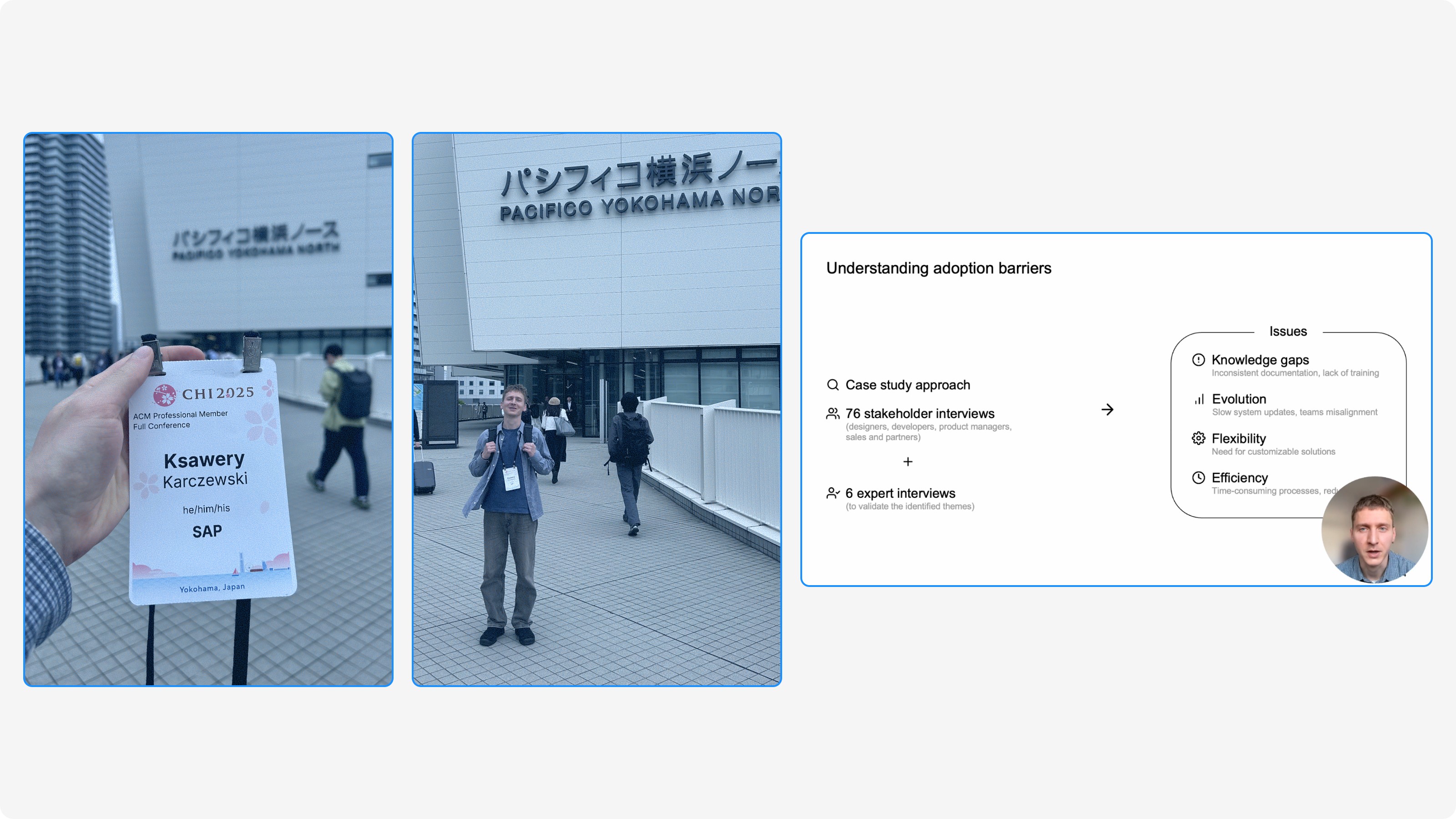
This work originated from my Master’s thesis at SAP and culminated in a publication at ACM CHI 2025 in Yokohama, Japan.
Challenge
Although SAP Fiori offered a comprehensive set of components, patterns, and guidelines, teams struggled to use it effectively in day-to-day product work. Designers often had difficulty finding relevant elements, updates to the system did not keep pace with product timelines, and strict guidelines limited the ability to address product-specific needs. As a result, teams created local workarounds, leading to duplicated effort and growing fragmentation across the product landscape.
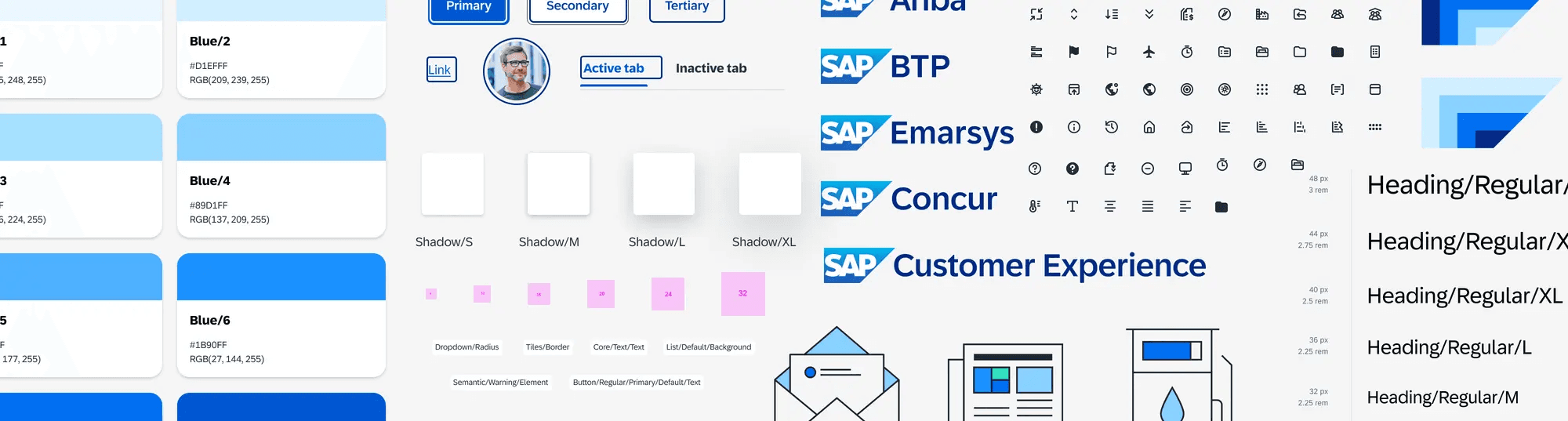
The fact that the design system was already very comprehensive (with more than 270 components for web-based applications and more than 80 for native mobile applications on iOS and Android) indicated that the potential for improvement would not be found within the design system itself, but rather within the supporting infrastructure and processes.
Research Approach
To better understand these adoption issues, we conducted 76 cross-disciplinary interviews with designers, developers, and design system experts. From more than 265 identified problem statements, clear themes emerged around knowledge gaps, slow system evolution, lack of flexibility, and inefficiencies caused by redundant local solutions. These insights revealed that the core problem was not the design system itself, but the infrastructure and processes supporting it.
Solution: Inner Source as a Model
We addressed these challenges by introducing an Inner Source approach to the design system. Responsibility for evolving the system was distributed across product teams, allowing teams to take ownership of the parts most relevant to their products while the central team retained stewardship of shared foundations. We established the role of embedded Design System Experts within product teams and evolved the system architecture to support extensibility, enabling teams to add functionality without compromising consistency, accessibility, or quality.
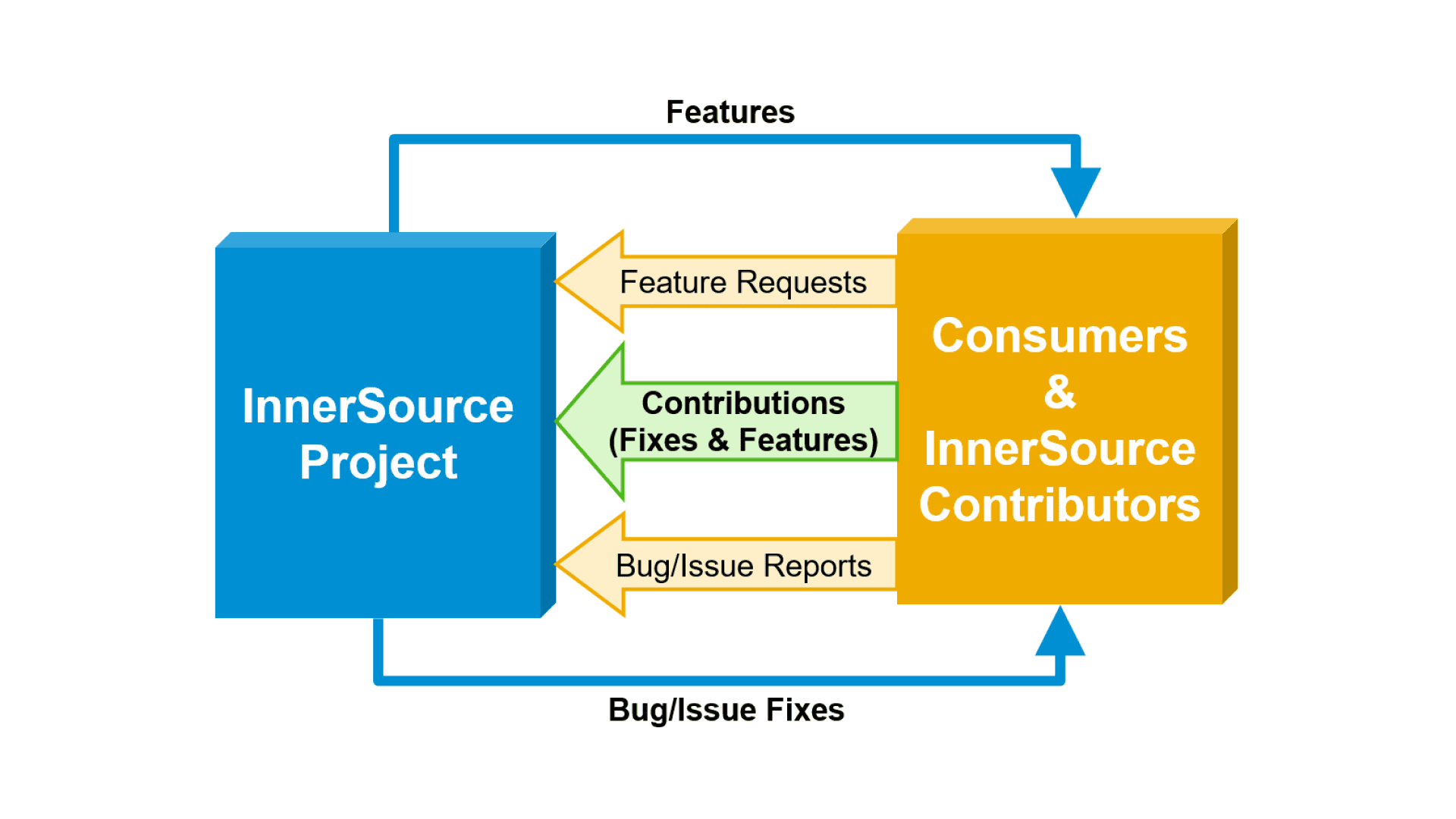
Inner source is already an established practice at SAP, enabling teams to contribute to projects owned by other teams. As noted by an expert from the open-source office, “Inner source has matured within SAP software development (…) with the intention of contributing across teams.”
Impact
After more than nine months in pilot, the new model has processed over 120 design system requests and improved collaboration between central and product teams. Designers increasingly work through their embedded experts, overall satisfaction with the design system has risen, and ownership is more clearly defined. While challenges remain around capacity and process efficiency, the approach has proven effective in scaling the design system within a large enterprise organization.
Reflection
This project demonstrates how design systems are as much about organizational design as they are about components. By focusing on shared ownership, extensibility, and trust, we shifted SAP Fiori from a centralized system to a collaborative platform that can evolve alongside product needs at scale.
You can find the complete paper here: https://dl.acm.org/doi/10.1145/3706599.3706705